I’m not a fan of the breadsticks… I would vote #4 out of the bag! How about you?
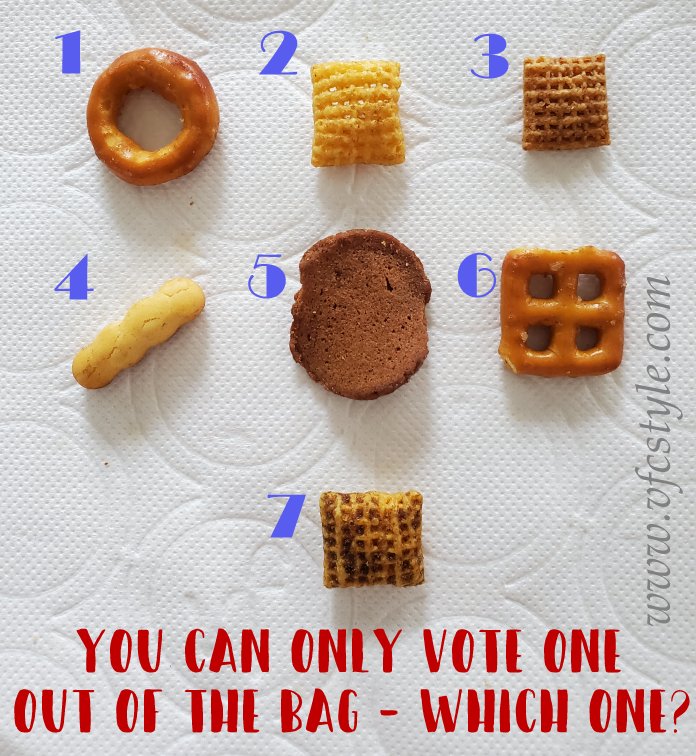
I’m not a fan of the breadsticks… I would vote #4 out of the bag! How about you?
Over in my Facebook Group, Thrifty Tablescapers, members post daily with photos of lovely budget-friendly tables they’ve set with thrift-store finds, handed down/inherited treasures, and Dollar Tree dishes. These “thrifty” sources are always my go-to’s!
But recently, one of the gals posted an absolutely gorgeous table using the most amazing chargers which she mentioned were available on Amazon. When I went to check them out, they were out of stock – but a couple weeks later they returned, and I decided to go ahead and splurge. At $30 for six, plus free Prime shipping and two-day delivery, they were a bit more than I would normally spend.
But guys, I’m soooo glad I did because they are gorgeous! And while I did indeed pay full retail for them, it didn’t take long to realize how many different dinner plates I have that will go with them. SO many possibilities… and that makes them thrifty – right? (Please tell me it does!)
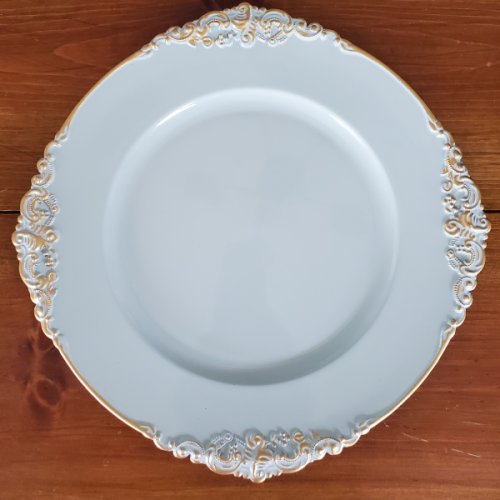
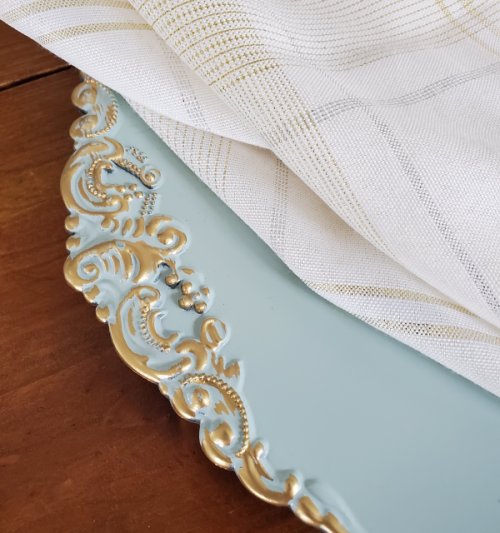
The chargers are by Allgala, imported, and thick plastic. The ones I purchased are in baby blue with gold details in the sculpted edges, but this style also comes in pink. They arrived with a little foam slip-sheet in between each one, so no surface scratches occurred during shipping.
The first thing I did after unpacking them was – what else – play with some dishes to see what I had that would go well with them. I found a few favorites!
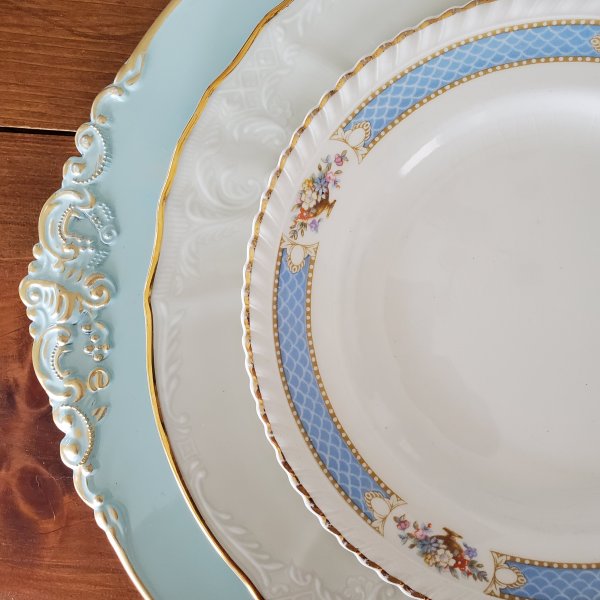
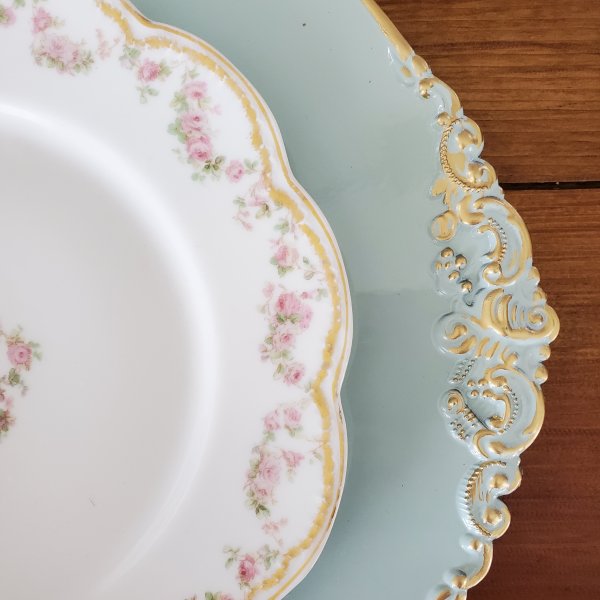
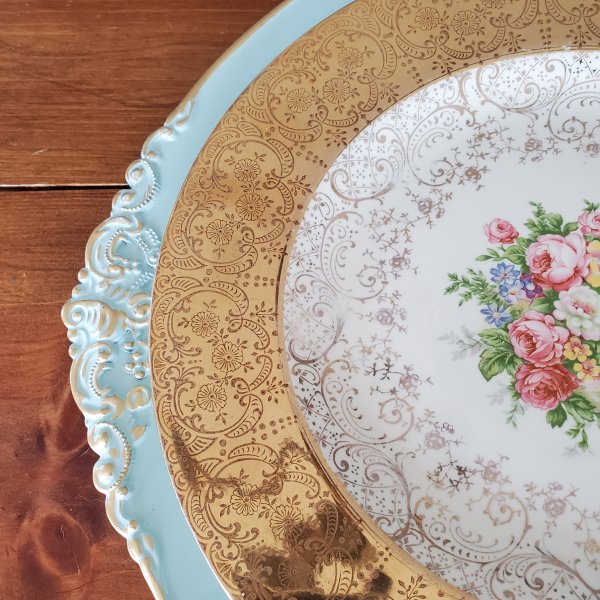
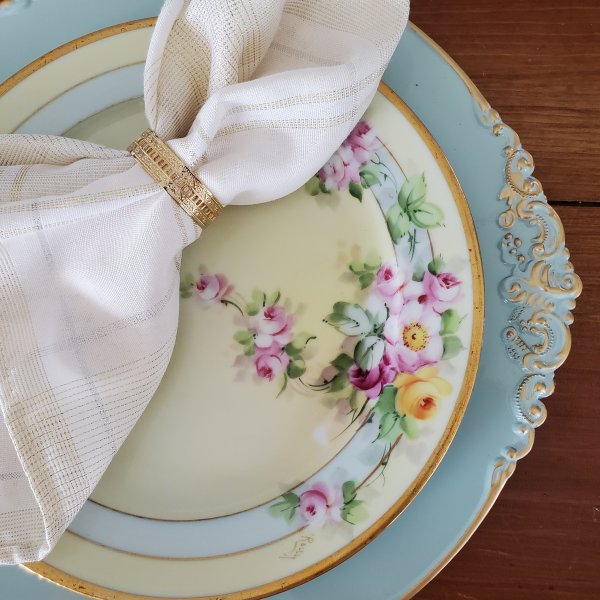
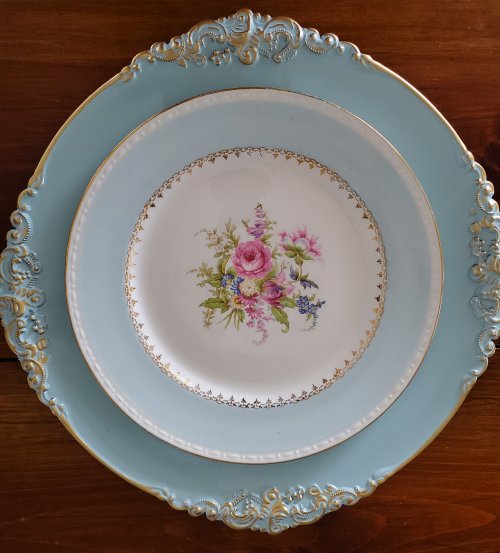
Can’t wait to do something really special with these! If you’d like to buy them for yourself, you can follow this link:
Please note that the above is an affiliate link, meaning if you click on it and make a purchase through my link, it costs you nothing additional but I do get a small commission! (So thanks for using my link if you do decide to purchase! Also note that Allgala has several different chargers to pick from if these aren’t your style – same link above!)
What’s your most recent splurge? Let me know in the comments!
In 2018 I set a summer table that was loosely inspired by the colors of Provence, in France. Which is my pseudo-sophisticated way of saying that it was primarily done in blue and yellow. (Nevermind that if you Google “colors of Provence” it brings up a wide variety of colors, including vibrant shades of red, orange, fuschia, and more…. to me Provence means blue and yellow. And lavender, but that didn’t really fit with my table plan.)
(For more pretty tables set on a budget, check out my Facebook group, Thrifty Tablescapers!)
Anyway, that table has always been one of my favorites, so this year I decided to try another variation on the Provence (blue and yellow) theme, set as a table for two. I also wanted this table to have some sort of “uniquely Provencal” element, but of course had no idea what that might be. So I Googled “symbols of Provence,” and found a blog post entitled “La Cigale: Why the Cicada Became the Symbol of Provence.”
Cicadas? Ug, I HATE cicadas! They creep me out to look at them, especially their eyes and those crispy brown “shells” they leave behind when they molt!

Still… some French guy a long time ago adapted the story of “The Grasshopper and the Ant” to instead feature a “cigale” who produced music all summer instead of working to store up food… and you can guess how that turned out, so maybe, I thought, maybe there is something romantic and French about cicadas that I missing.

GAAAAAA!!! Nope, still horrific.
And yet. And yet. They were long ago adopted by the good citizens of Provence as a symbol of their region so they must have some socially redeeming value… or maybe it was just that the good citizens of Provence finally realized they were never going to escape that deafening “weeer-weeer-WEEEEEERRRRrrrrrr” noise so they might as well embrace it.
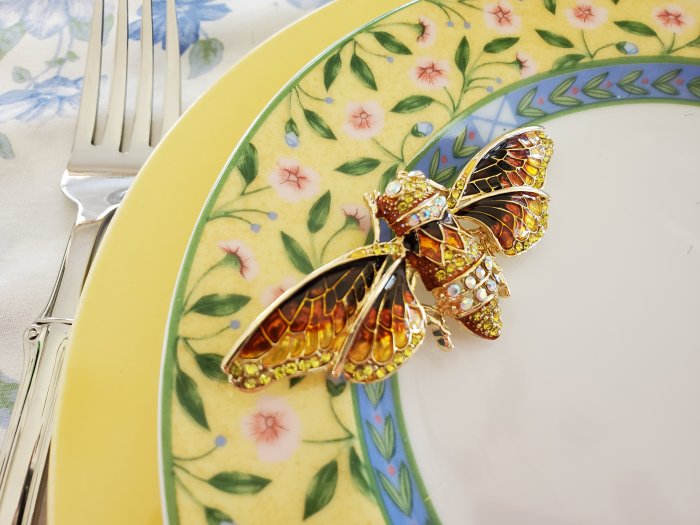
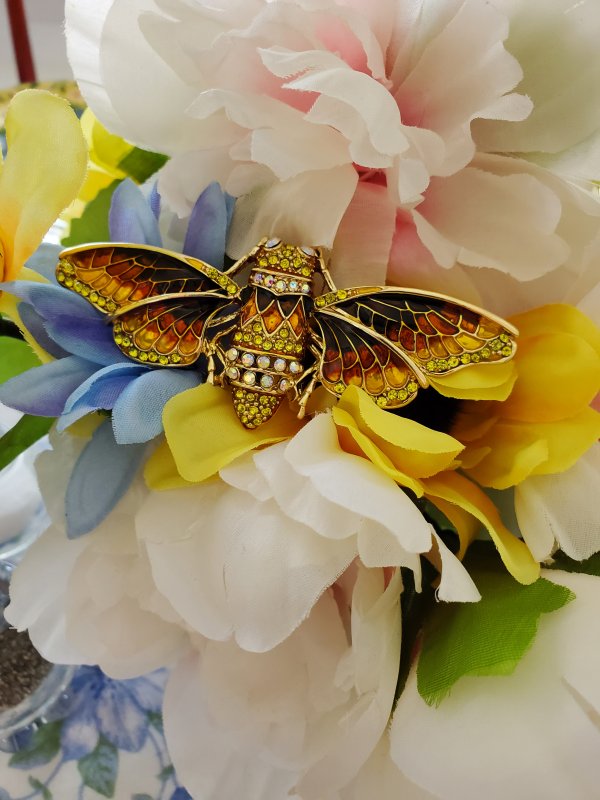
In any case, who am I to argue with good citizens? “La Cigale” for the win, in the form of a beautiful cicada brooch pin found on Amazon.
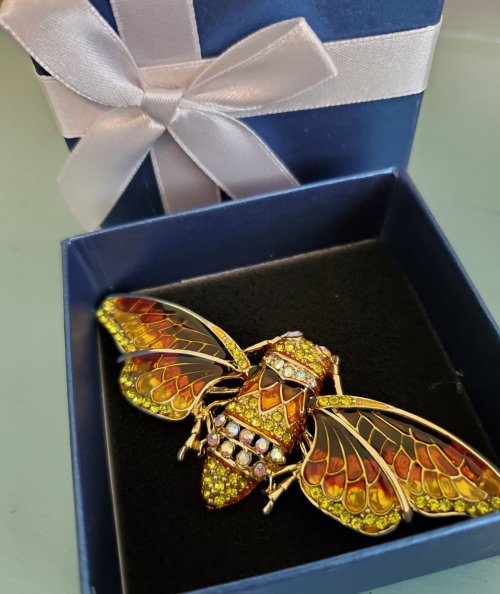
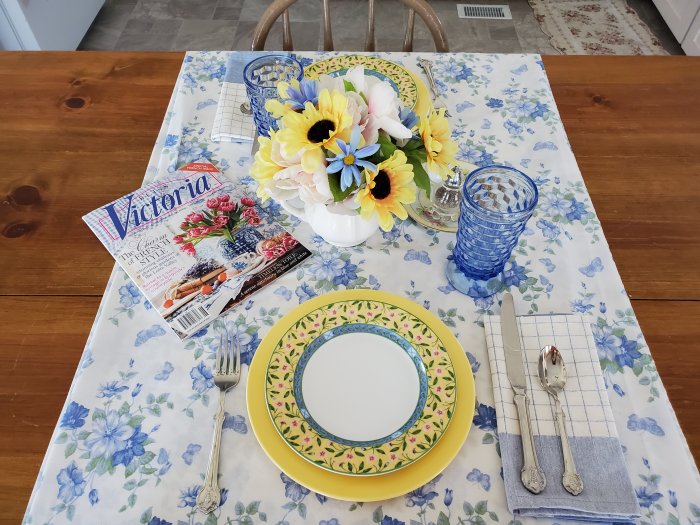
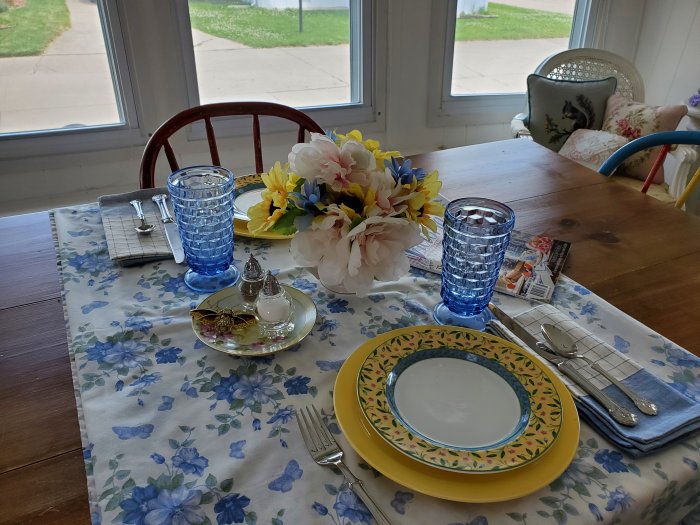
The tablecloth for this table is a flat sheet, folded to a size suitable for defining the two-person space on a four-person table.
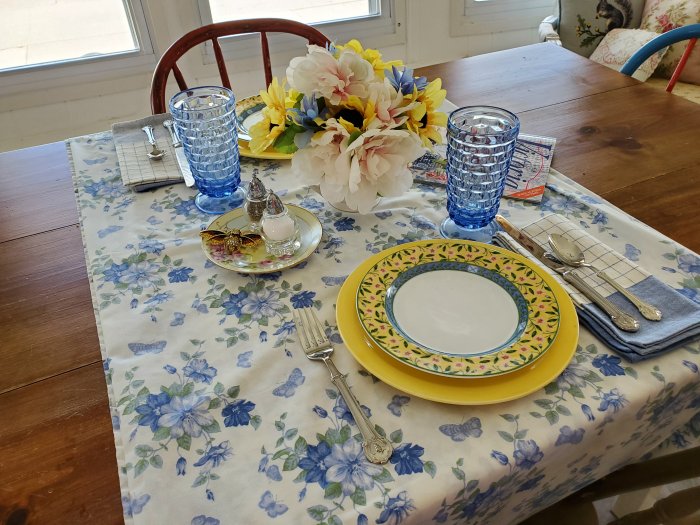
Glassware is Whitehall by Indiana Glass in a beautiful (dare I say) French blue – thrift store finds I’ve had now for many years. They are a favorite for their size and weight, and I have them in several colors.
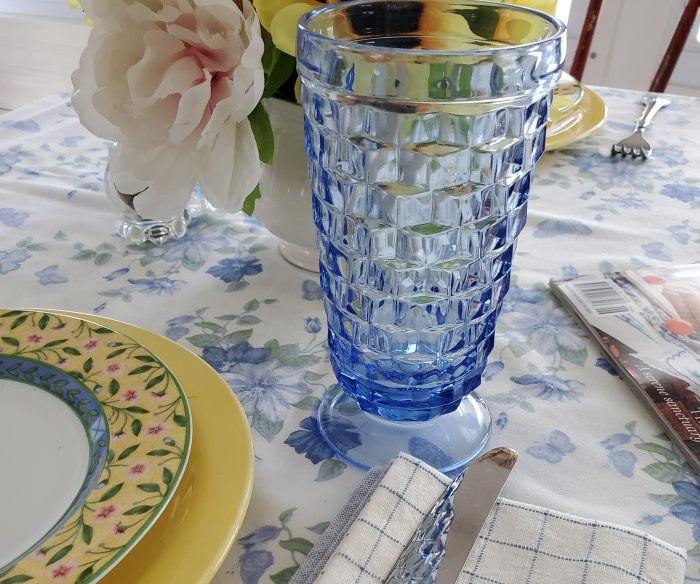
Sunny yellow dinner plates are marked “Hollywood Craftsmen” on the bottom, and salad plates are “Rose Bouquet” by Coventry Fine Porcelain. Also thrift store finds.
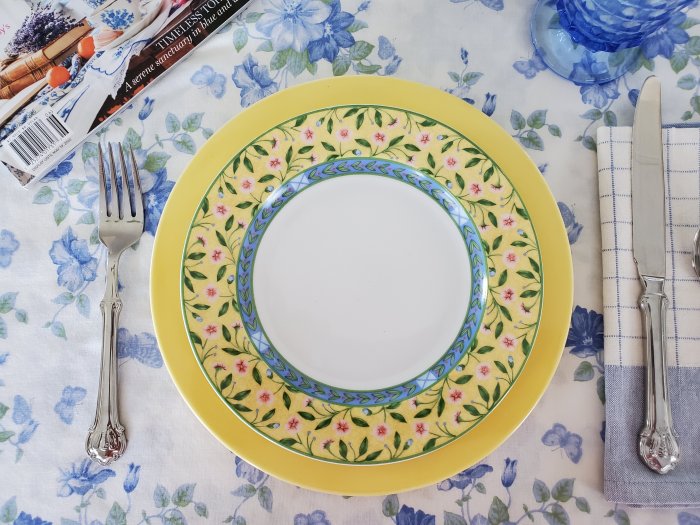
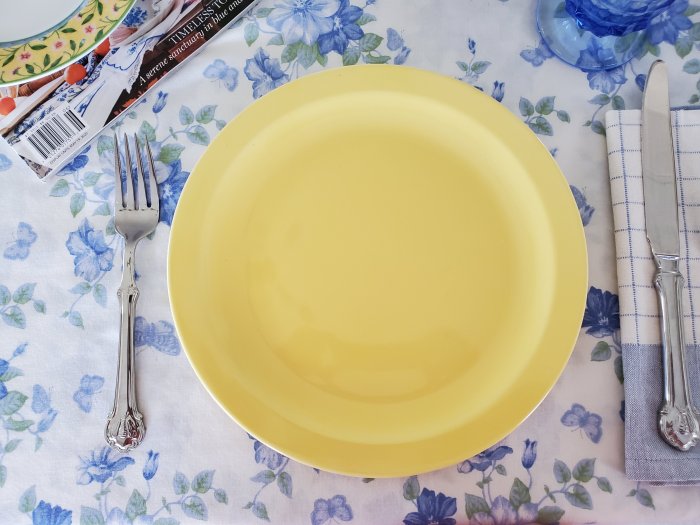
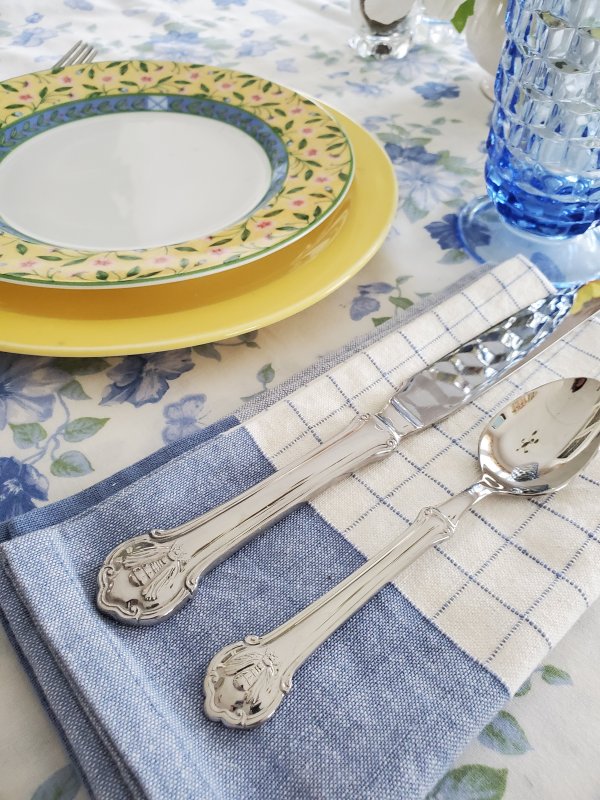
Flatware was a splurge… I now have four place settings of “Napoleon Bee” by Wallace, which I’ve collected over the past year via Amazon. The pretty plaid napkins were consignment store finds.
The centerpiece features the same bunch of flowers from my 2018 Provence tablescape, just plopped down into a different container – this time a white sugar bowl by Federalist Ironstone.
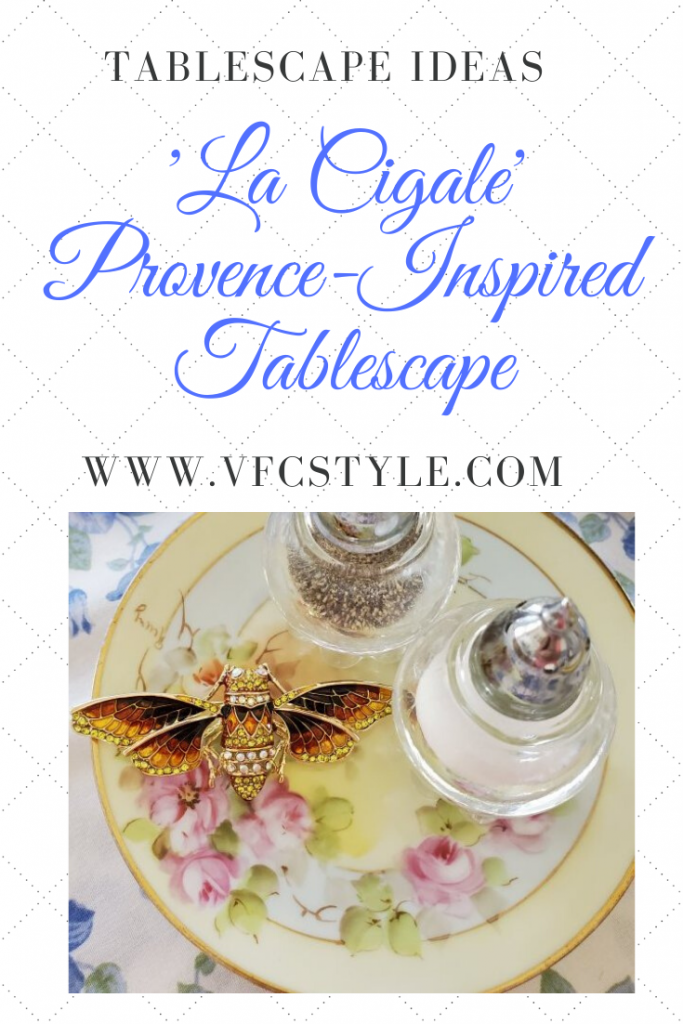
Have you spotted “la cigale” yet? Here he is, perched on a hand-painted side plate that also corrals the salt and pepper shakers.
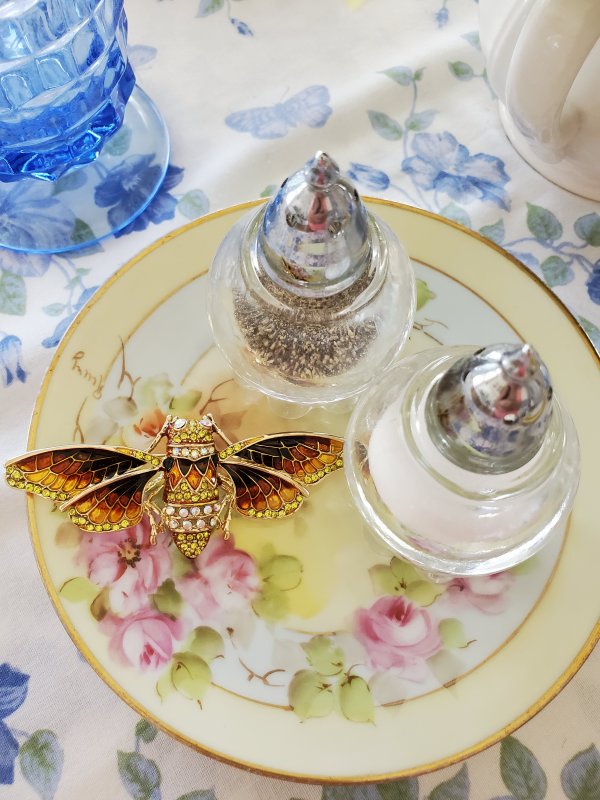
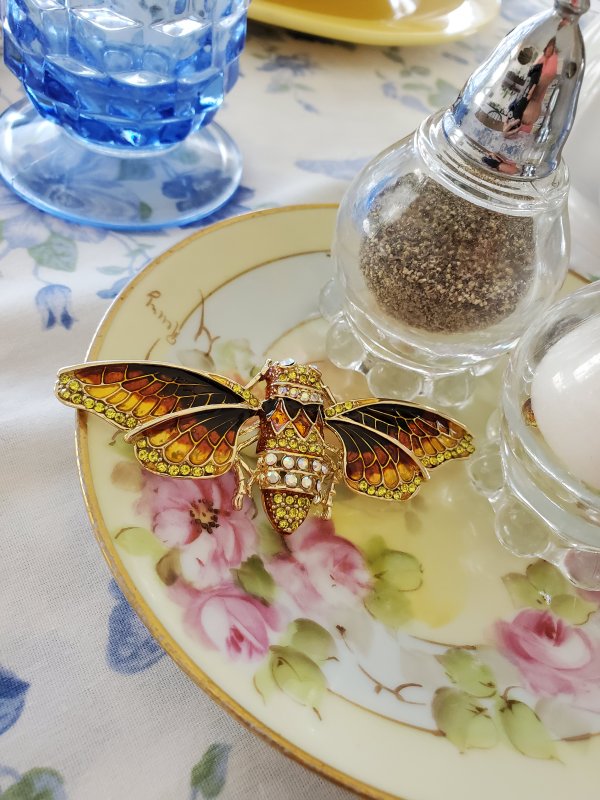
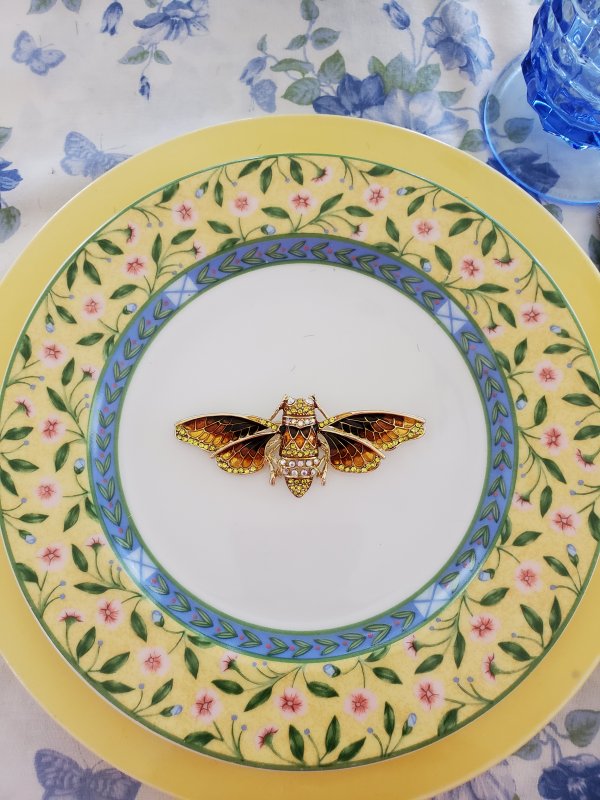
I moved him around to various spots on the table just because he looked so beautiful.
Also included for perusal before lunch is served: the May 2020 issue of Victoria Magazine, because it perfectly complements the color scheme and features “The Charm of French Style.” (It does not, however, mention cicadas. At all.)
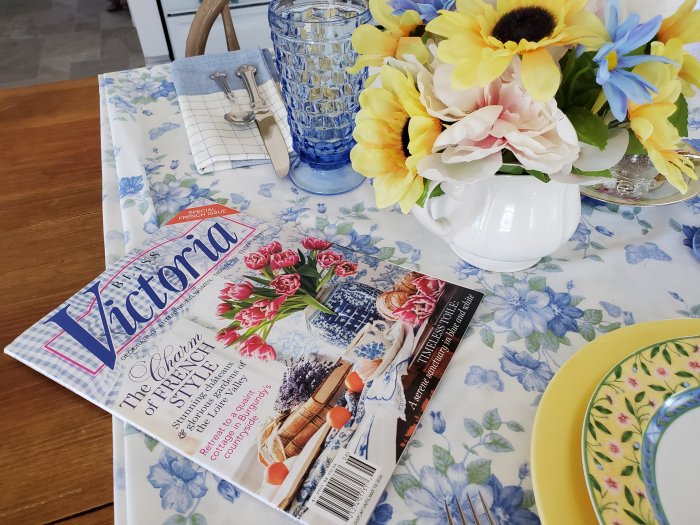
A few more views around the table.
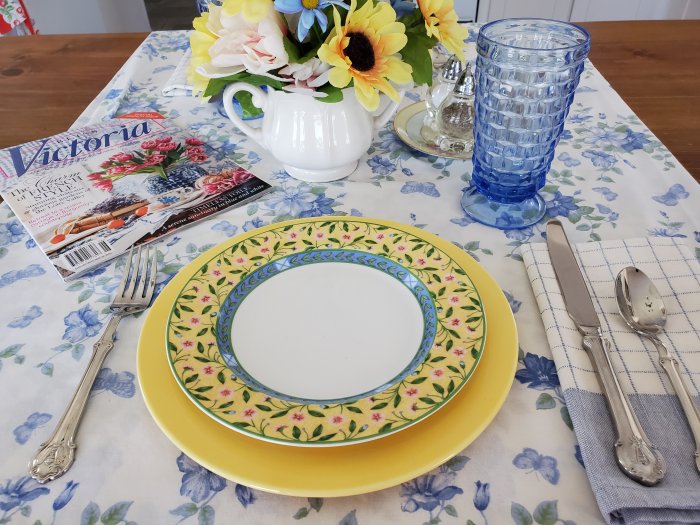
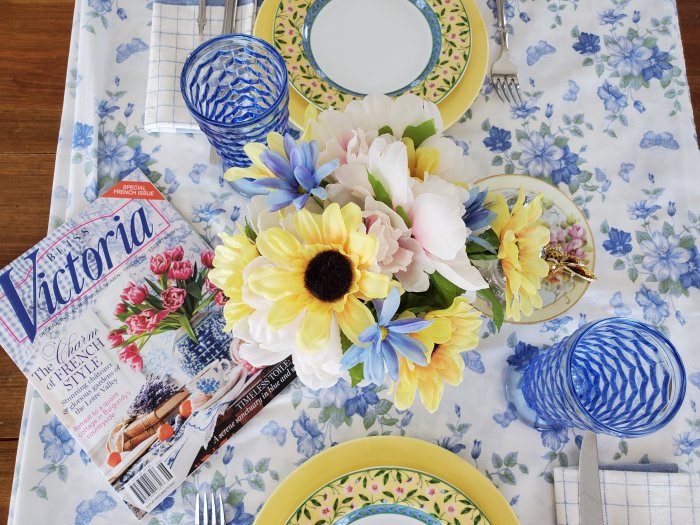
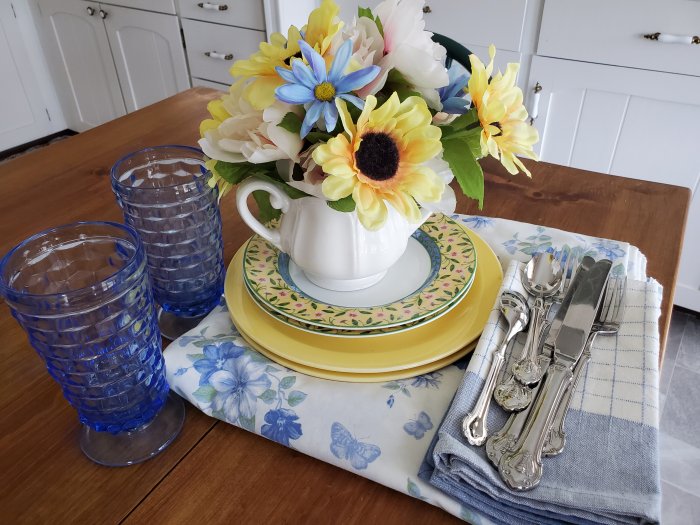
The put-away shot, because everything just looks so pretty waiting to go back into the cupboards.
And an image to Pin if you would like to save my Provence 2020 table for future ideas!
I’m linking this tablescape to Tablescape Thursday over at Susan’s blog, Between Naps on the Porch. Be sure to click through for many more wonderful table-setting ideas!
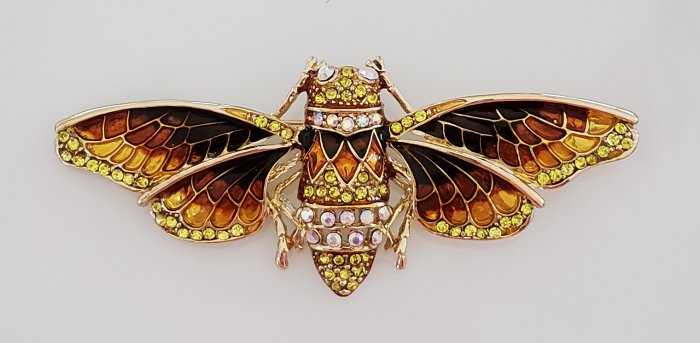
Please note: this post contains my affiliate link to Amazon. If you click through to purchase your very own cicada brooch pin, it costs you nothing extra but I receive a small commission. Thank you for using my link if you desire!
Welcome to Part 6 of my Tablescaping 101 series! Today we’re turning our attention to what we’re drinking and what we’ll drink it from. Unless we’re going super-casual with plastic cups (totally cool if that’s the vibe!), this means glassware!

Like flatware and the plates in “the stack,” the glassware we need depends on what’s being served – in this case, what beverage(s) will accompany our meal. Here are my basic guidelines for choosing drinkware:
– A different glass for each beverage
– Anchor with water, then set subsequent courses to the right, from the outside in
– Decide whether to set at the place setting, or serve later
Let’s elaborate on each of these!
A different glass for each beverage
A casual family meal might only require one glass per place setting – in it can be served water, milk, soda… whatever each person wishes to have with their meal.
A simple dinner party might require a water glass and a wine glass for each person.
A more formal or multi-course dinner, with a wine for each course, will require a water glass plus a different glass for each wine.
Different/additional glassware will be needed if you are also serving champagne or sparkling wine, or a dessert wine.
Arrange from the outside in
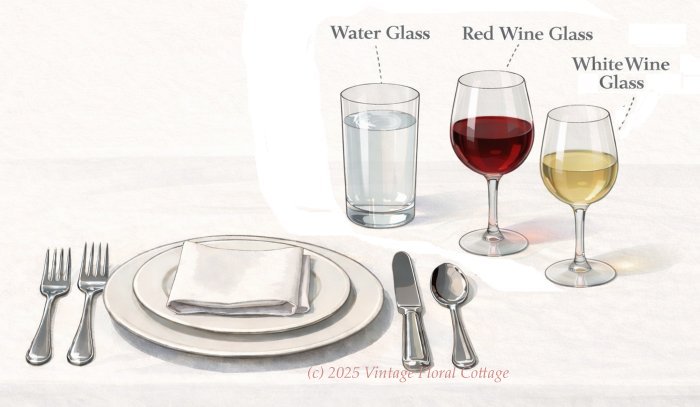
Like flatware, you have one anchor piece – the water glass – that has its designated spot – just above the dinner knife. Then the other pieces – the wine glasses – are set outward from this anchor point, to the right. Usually this means a glass for red wine goes next to the water glass, and a glass for white wine goes to the right of the red. But, in any case, you would use the wine glasses like you do the flatware: from the outside in, leaving the anchor (the water glass) in its designated spot. Therefore, the glass for the first wine to be consumed (the earliest wine course) will be drunk from the glass in the outermost position.
Speaking of wine glasses, there are many different kinds of glasses for different kinds of wine. We won’t do too deep of a dive into types of wine glasses, but we’ll cover the basics – and remember, you don’t have to own every kind of wine glass under the sun to have a lovely dinner!
Decide whether to set a glass in advance, or have it brought in later.
While you might set out the coffee cup and saucer at the place setting (it would go to the far right of the other drinkware), it’s less crowded on the table to have these items brought in after the meal when coffee is being served and after some of the other items have been cleared away. Consider each beverage being served, when it’s being served, and decide whether it needs to be on the table for the entire meal.
Now that we know the basics, let’s look at the two main types of glassware used in a meal: water glasses, and wine glasses.
Water Glasses
There are a few styles of glassware that make good vessels for water, but they all have one thing in common: generous portion size. This is because water is the beverage we’ll drink the most of during our meal, and of course in America we need to leave room for ice. (Apparently ice in a beverage is an ‘American thing’? I didn’t know this until comparatively recently.)
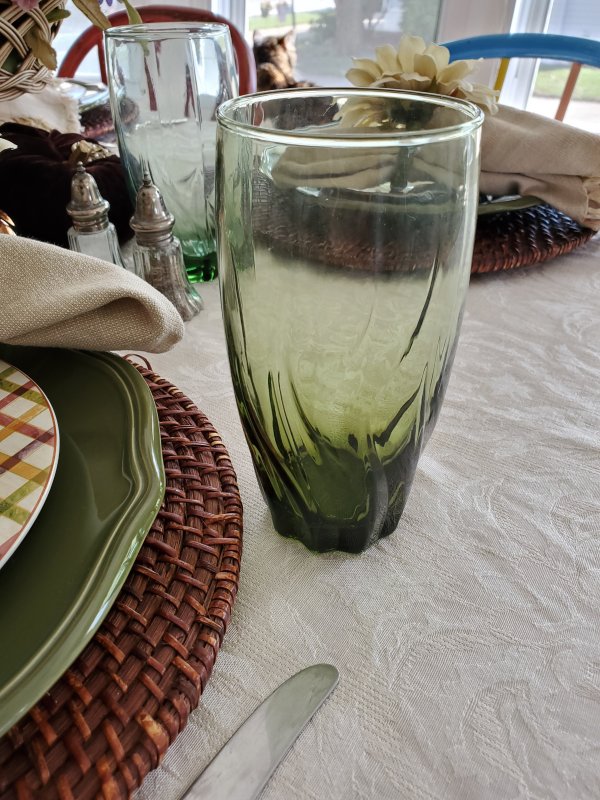
Tumblers. A tumbler can be straight or “footed.” For me, tumblers in various colors and styles are a staple of the tablescaping stash. They are plentiful and fun to collect from thrift stores and other second-hand sources, and they are an easy and inexpensive way to contribute to the color scheme of a table setting. My all-time favorite water glass is this footed tumbler by Indiana Glass (or is it Fostoria? IYKYK):
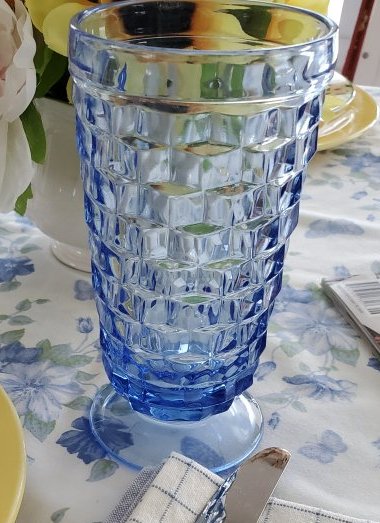
Goblets. For me a goblet is similar to a red wine glass but made of thicker glass or even ceramic. It has either a thick stem or a short foot. Goblets are great for serving water due to the serving capacity. A favorite of mine is “Duratuff” by Libbey – a very industrial name for a great-looking, large-capacity glass.
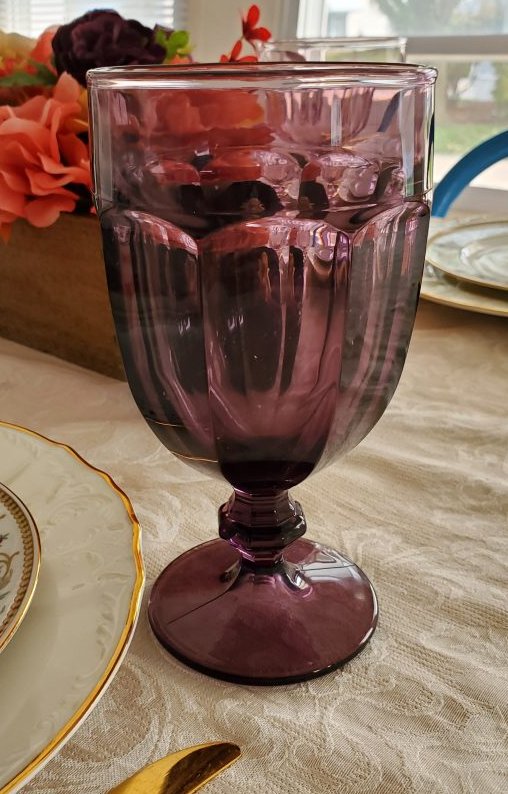
Barware. Some types of glasses get their names from barware: “Old fashioned” and “rocks” are two such barware terms. A rocks glass is a short, stout glass in which you would put ice (“rocks”) and the beverage. A “highball” is a taller version of the rocks glass. A generously sized rocks or highball glass makes a great casual water glass!
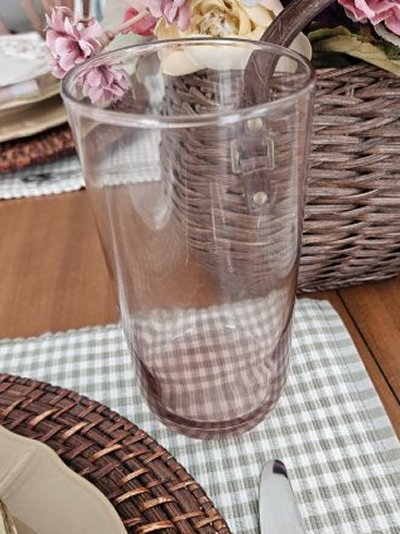
Wine Glasses
Earlier I mentioned that there are different glasses for different types of wine. And not just red vs. white: in the reds category, there are different glasses for Cabernet, Burgundy, Bordeaux, and others. The different types enhance the flavor and other characteristics of each specific wine. It is the same for the whites.
There are many resources out there for choosing exactly the right glass for exactly the type of wine being served, but since our goal here is just to understand the basics, let’s simplify into categories for red and white wine.
Red wines: Glasses for red wines are generally larger with wider openings, larger bowls, and shorter stems. These features allow the red wine to breathe and for flavors and aromas to fully comingle and escape the glass, leading to better taste and a better aromatic experience.
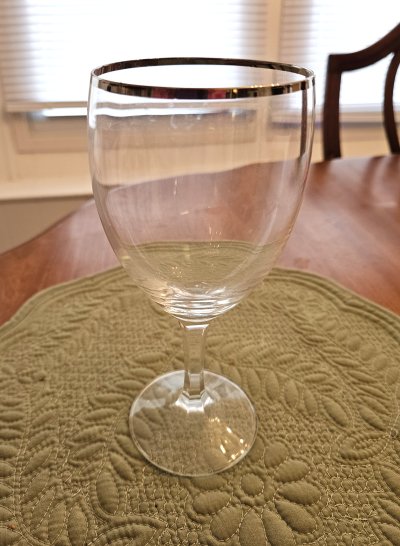
White Wines: Glasses for white wines generally have a narrower bowl and longer stem. These features help keep the subtler blend of aromas in white wines from dissipating, and keep the drinker’s hand away from the bowl so body heat doesn’t change the temperature – and therefore the flavor – of the wine. (Pro tip for guests: always hold a wine glass by the stem – not by the bowl!)

Champagne and sparkling wines. Glasses for champagne and sparkling wine are called flutes. They have a tall, narrow bowl which helps retain the carbonation. A clear or crystal one would also allow you to watch the bubbles rise.
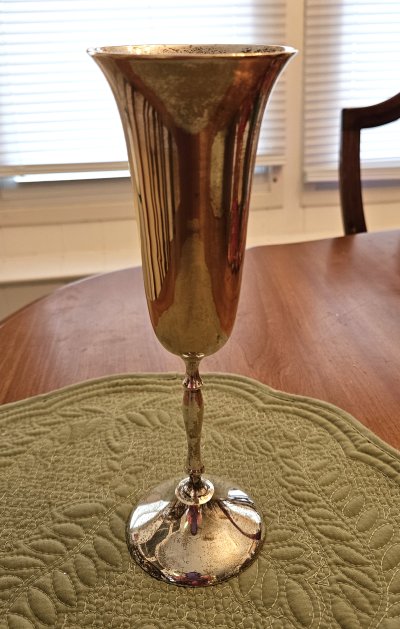
Dessert wine: Glasses for dessert wines are similar in shape to other wine glasses but smaller in capacity, since the serving size for dessert wine is smaller.
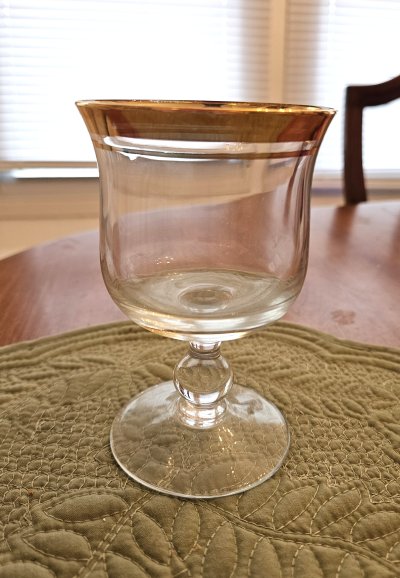
The key to choosing wine glasses is in the menu itself – again, it goes back to what’s being served:
Other glassware
Water and wine are not the only beverages one might serve. For most other beverages, such as iced tea, milk, or soda, a tumbler could be used
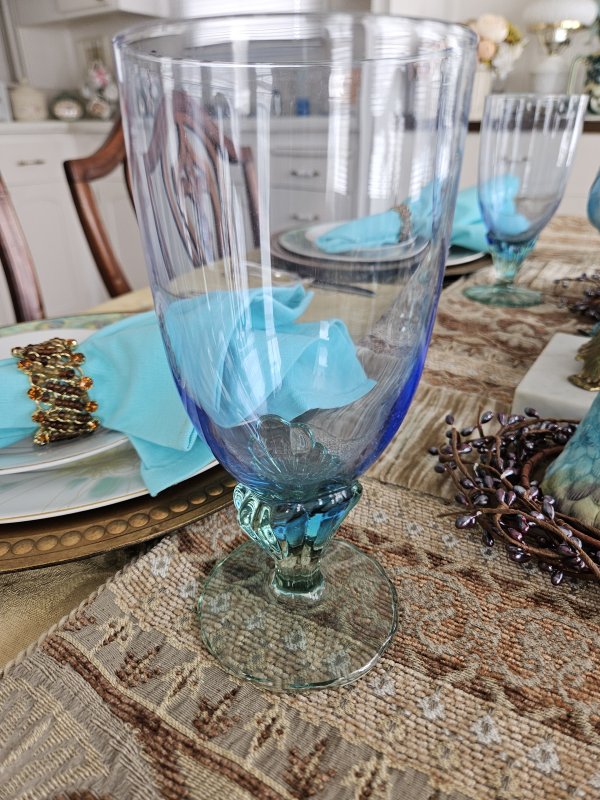
For juice, typically served at breakfast, a small-capacity glass is used. Decorative juice sets, including a carafe or pitcher and set of small glasses, were popular in the mid-century era. These can be great on a vintage-themed breakfast table, as can “Swanky Swigs” – columnar glasses with brightly colored designs printed on them.
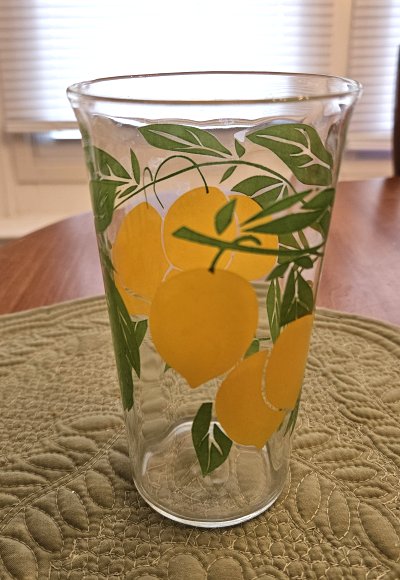
Don’t be put off by the wide variety of glassware when designing your tablescape. Just remember you will want a glass for water and then separate glasses for each of the other beverages, whether or not they are technically the “correct” glasses. When considering your “other beverages,” think first about what’s being served and choose the right glass for the beverage that accompanies the course.
Glassware is plentiful and inexpensive at thrift stores and other secondhand venues, so have fun collecting!
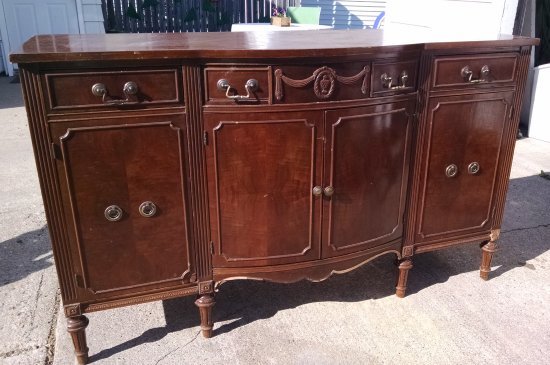
If you’re ever up for a little online verbal abuse, join a decorating group on Facebook then post a picture of a piece of vintage or antique furniture and ask for people’s opinions on what color you should paint it. You might actually get a few color ideas, but mostly what you’ll get is a bunch of bullies begging, pleading, cajoling, and even aggressively discouraging you from painting the piece at all. Here are some verbatim comments on a recent group post of this nature:
“Don’t put a drop of paint on that beautiful piece.”
“Surely you would not choose to ruin this beautiful piece of furniture with paint? Buy a shabby piece if you want to paint.”
“Why would you want to paint such a beautiful piece?”
There are many reasons why someone would want to paint a piece of furniture – even a vintage or antique piece – and NONE of them involve getting someone else’s permission or approval to do so.
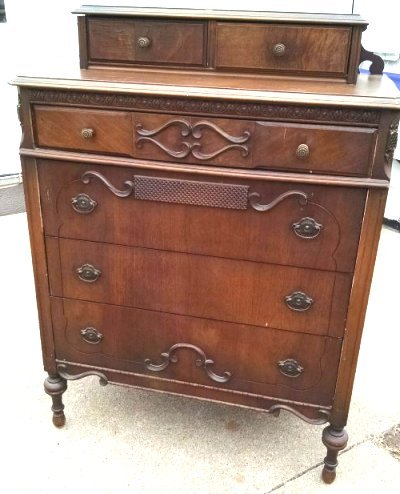
I’ve done several pieces myself, and while I have my personal ideas about what I will and will not paint, I would never dream of trying to talk someone else out of their project.
Some people use the argument that painted furniture is a fad and will soon be out of style. This is because they have not studied interior decoration at all and have no concept of history beyond what they can personally recall from their Pinterest feed.
The fact is, painting furniture has been a thing at least since the early to mid-1700’s when, during the reigns of Louis XV and Louis XVI, painted and partially gilded furniture became especially desirable for salons, bedrooms, and private apartments. This multi-century “fad” carried over to England and to the United States. Elsie de Wolfe, considered to be the first professional interior decorator in America, published her book, “The House in Good Taste,” in 1913. De Wolfe recommended painted furniture throughout her book – her favorite color was a light gray. Meanwhile, hand-painted decoration on furniture is of course an art form dating back to the Egyptians and other ancient cultures.
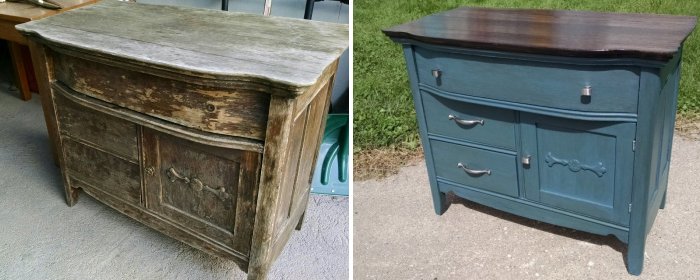
More recently, chalk paint and mineral paint products have emerged that caused a resurgence in the popularity of painting furniture. This is the “fad” that one opinionated commenter said “would be fading in about a year.” But again, even if one were to do only the most cursory research, one would find that Annie Sloan Chalk Paint – the brand that started the modern resurgence – was introduced in 1990. That’s THIRTY YEARS AGO. Not a fad, not something new, and not likely to just go away “in about a year”!
Others argue that you’ll destroy the value of the piece if you paint it. These are the folks who have watched a few episodes of “Antiques Roadshow” and think that every piece in Grandma’s attic is a museum treasure. Again, no – every piece is not a museum piece. Very few pieces carry any significant monetary value, and even if they did – so what? The value of antiques and antique furniture tanked in 2008 and it will again some day. Obviously, if you are keeping a piece because you hope it will go up in value and it’s part of your retirement nest egg, then no – don’t paint it. But if you are simply trying to enjoy a piece that’s come down through your family, you should be able to paint it without being judged or harassed simply because you asked for color suggestions.
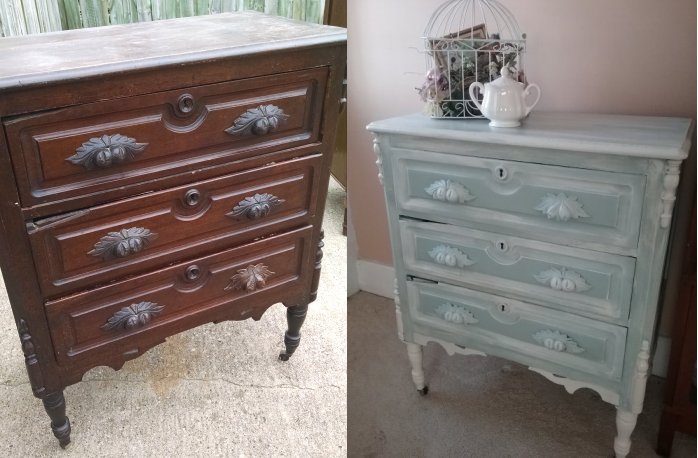
Bottom line for me is this: just because a piece could be sanded down and re-stained doesn’t mean that’s the only way to enjoy it. In fact, re-staining an antique can also destroy the value. So if you’re going to alter it, do it in a way that lets you enjoy the piece your way!
If you have a vintage or antique piece of furniture, and painting it will help you better incorporate it into your home, then by all means paint it! Painting furniture is easier than ever with today’s products, it’s therapeutic (not to mention rewarding when you see the finished result), and it’s “re-use” at its best!
Stand up to the bullies who would tell you how to enjoy your furniture. Paint it if you wish, make it your own, and love it for another generation!
Save this post to Pinterest for the next time you need a little encouragement!


 |
 |
 |
 |
 |

Click the book cover image to purchase for just $2.99!