I doubt if author Jane Austen ever imagined that her books would still be delighting readers, inspiring academics, and spawning re-tellings, 250 years after her birth, yet here we are!
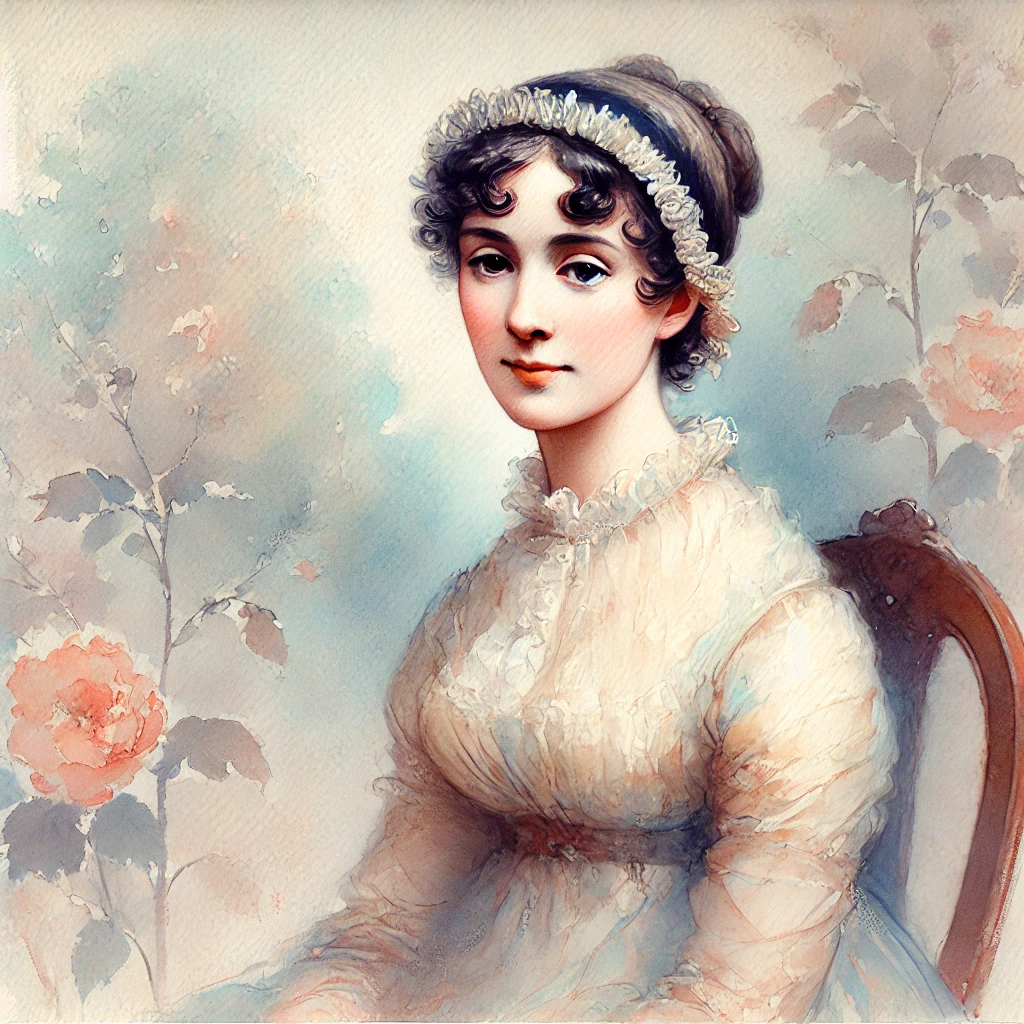
Jane was born December 16, 1775, in Steventon, England, and died July 18, 1817, in Winchester, England. In between those years, she lived a life filled with sharp-witted observation that resulted in the eventual publication of six unique novels that forged the basis for our present-day relationship-based romantic and other fiction.
To honor Jane in her 250th year, I set (and met!) a goal of reading all six of her published novels (including a few re-reads), her preserved teen-age writings, and as much non-fiction about her life and times as I possibly could throughout 2025. It was a great year of entertainment and learning. There is so much I could share about my favorite books and characters, the minutiae of the nuanced world she knew and mirrored in her books, and even the film adaptations and podcasts I indulged in.
We can talk about all of that, perhaps, another time. (For starters, feel free to mention your favorite Austen novel in the comments, or answer the timeless question of who is the best Mr. Darcy!) To celebrate her birthday, I thought I would share a few of the more interesting things I learned about Jane as a person during my year of study.
- As a child, Jane was a keen observer of people and situations, and her preserved teen-age writings reveal a girl who seemed to understand the workings of adult society at a very young age. Her early works (snippets, short stories, and novellas) parodied and satirized the types of books she was reading (History of England, anyone?). It appears that from her beginnings as a writer, Jane intended to “call out” all that seemed illogical, inequitable, and hypocritical about a society that gave few rights and little free agency to women.
- Jane was not able to take widespread public credit for her own published work during her lifetime. The by-line of her first published work, Sense and Sensibility, simply read, “By a Lady.” Writing novels – especially those sharply observant (if not downright critical) of the society which governed her own existence – was simply not an acceptable pursuit for a woman. That her parents encouraged her to write, and that she was known at all (in very small circles) as a published author, was quite progressive. It was only after her death, when her brother took control of her publishing catalog and announced, with the posthumous publication of Northanger Abbey in 1817, that his sister Jane Austen was the author of that work and other well-loved novels of the previous decade, that her reputation became more widespread.
- Her beloved sister Cassandra corresponded prolifically with Jane whenever they were apart throughout their lives, but destroyed most of the letters shortly after Jane died. This was purportedly to protect Jane’s nieces and nephews from reading her often acerbic observations about relatives and neighbors well known to the children. It was likely also about controlling the public’s image of Jane and understanding of her character after her death.
- Jane’s posthumous persona was not just shaped by Cassandra burning her letters. In fact, Jane’s family seems to have gone to great lengths to “control the narrative” about who she was, as a person and author, after her death. They made sure to portray her as a kind, gentle, “quiet writer” who only wrote for enjoyment and cared little for financial success. (Very womanly, yes?) But all this is easily contradicted by Jane’s surviving letters and even her finished novels, which are filled with critical observations (and unpleasant characters who closely resembled people Jane actually knew) about society and the limited sphere of influence afforded to women at the time.
Jane’s novels were published in her lifetime as follows: Sense and Sensibility (1811), Pride and Prejudice (1813), Mansfield Park (1814), and Emma (1816). Posthumously, Northanger Abbey and Persuasion were published in 1817. At the time of her death, the novel Lady Susan was finished but unpublished, and novels Sanditon and The Watsons were unfinished.
In addition to all of the published works, I highly recommend Jane Austen at Home, by Lucy Worsley, Jane Austen Complete Juvenilia edited by Ray Moore, and literally every episode of the immersive podcast The Thing About Austen hosted by Zan Cammack and Diane Neu.