Rooted in rural life and shaped by generations of practical beauty, cottage style celebrates comfortable, livable chaos amidst collected, well-loved furnishings and timeworn objects that tell a story. It invites us, by virtue of its very roots, to slow down and transform the “everyday” of our modern life into a less hurried, more purposeful approach to living.
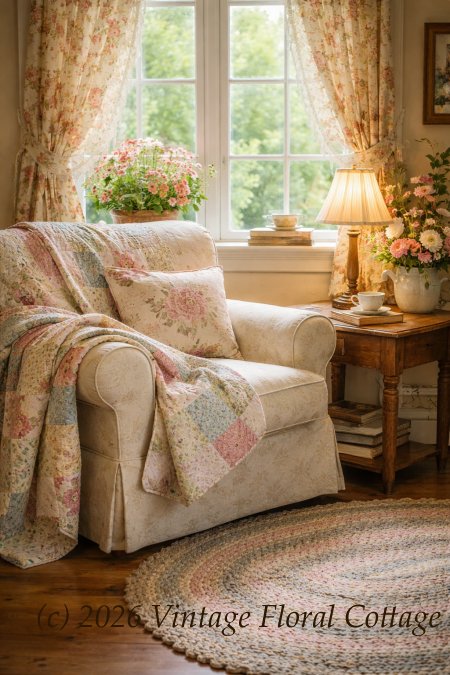
What is cottage style?
But what is a cottage? And what makes something “cottage style?” For me personally, it simply means cultivating a home furnished in pieces that are solid but previously loved – my favorites being handed down through my own family. But to understand and better appreciate the style, it has helped me to dig a little deeper into the origin of the word itself, and what it represented when it first came into broad, Middle English use.
Specifically, by researching the way land was once divvied up in England and Great Britain, where the term came into common use, I’ve come to appreciate that this style isn’t just about timeworn furniture – it’s about a make-do, re-use mindset.
A few hundred years ago, outside the larger cities and in the rural areas and countryside of that region, a titled member of the aristocracy owned and held thousands of acres of land, and represented the King or Queen in their geographic region. They served in Parliament, held political authority, managed economic factors such as rent, markets, and employment, maintained law and order, patronized the creative arts and artists, and set standards for fashion, etiquette, and taste – among other roles. They had their own fine home built on the land (the country house or manor), which was often the area’s largest employer.
They also had tenant farmers who worked their land on individual farms. These tenants built their lives and raised their generations with what they farmed and grew, and also paid the land owner for their tenancy in the currencies of produce, livestock, rent, and taxes1.
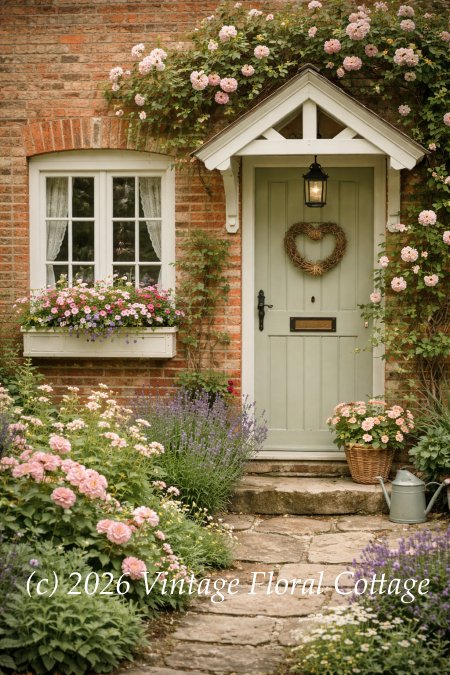
The tenants – from feudal times called cotters – lived in much humbler homes which came to be called cottages. These homes were small, simple, and rustic, and made of readily available materials such as locally sourced wood and stone. A typical cottage would have an open room with a fireplace/hearth and gathering area, plus one or more bedrooms often on a second half-storey.
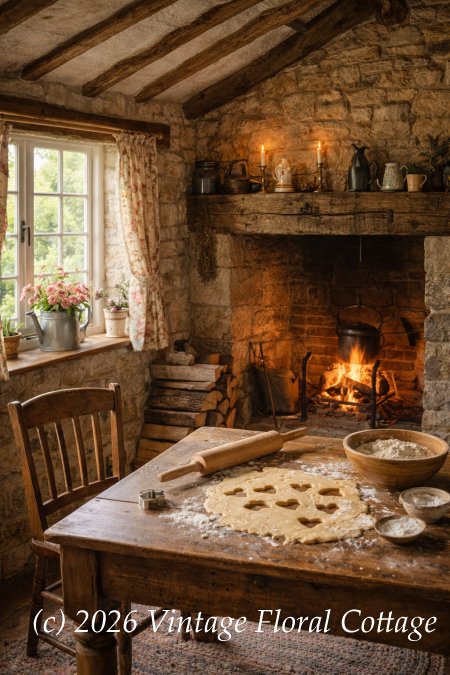
Over time, and with evolution away from this specific form of land ownership, governance, and tenancy, a cottage has come to mean any small house in general2.
Given that cottage dwellers were hard-working and self-sufficient people, their homes were far humbler than the manor houses. It is this simple style of living that continues to draw people to what we think of as cottage style.
We are privileged in a modern, instantly-accessible world that is full of electricity, indoor plumbing, technology, and other amenities – but that doesn’t mean we don’t yearn for a slower, simpler way of life.
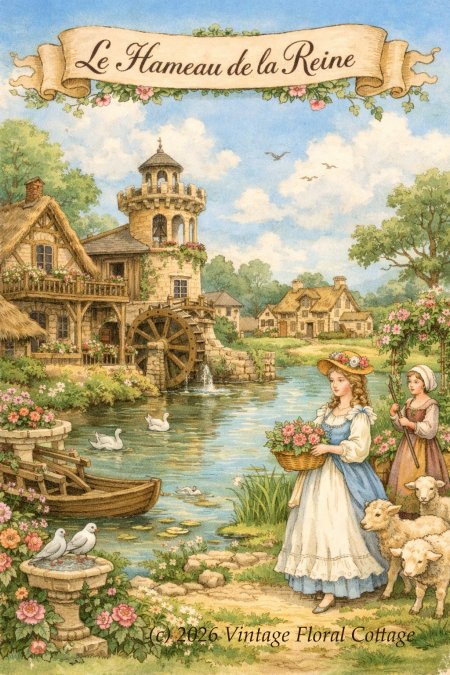
And we aren’t unique in this yearning. Even the (arguably) most famous aristocrat in history – Marie Antoinette, Queen of France from 1774-1792 – built herself not only a little she-shed called Petit Trianon but also an entire escapist farm village called Hameau de la Reine (The Queen’s Hamlet) where she could get away from the pressures of palace life and pretend to be a simple villager. (That this bit of cultural appropriation angered some of the actual “simple villagers” is a research rabbit-hole well worth reading about, but I won’t digress here.)
So given the description of cottages as small, humble, and rustic, what does that mean for defining cottage style today? What is the essence of cottage style? What makes a home – a cottage?
I tend to divide the elements of cottage style into categories such as exterior features, interior architectural elements, furniture, household wares, decoration/decor, and gardens.
For this article we are looking specifically for visual guidance on creating cottage style. So, here is my round-up of 50 individual elements of the style. Your home doesn’t have to have every one of these elements (or even the majority of them) to qualify as a cottage. In fact, I daresay the only thing your home really needs is a cozy, time-worn vibe that comes from surrounding yourself with your favorite things and a warm and loving atmosphere for family, self, and guests. Still, you might find (like I have found) a list to be helpful to get you started. You can of course pick and choose from the list as you please!
Exterior architectural features
1 or 1-1/2 storey dwelling
Picket fence
Stone wall
Gardens
Arbor/trellis
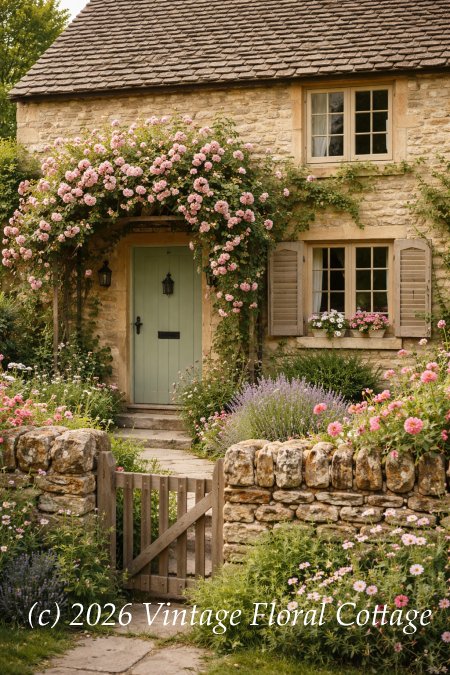
Brick or stone exterior
Wooden or wood-look shutters
Simple entrance/welcoming doorway with small overhang
Painted Door
Bonus points for a thatched roof!
Interior architectural elements
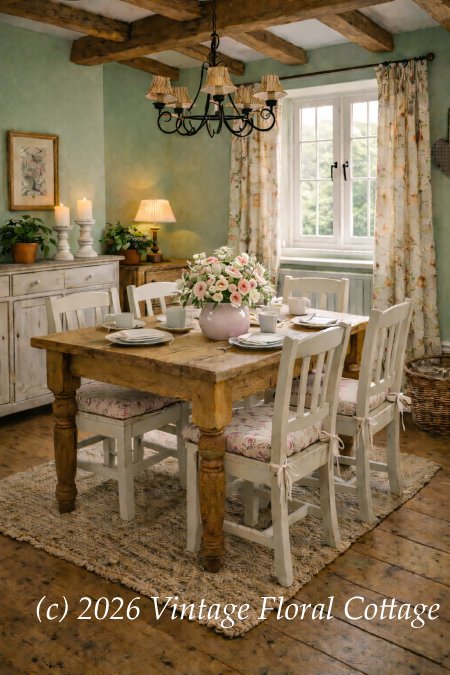
Exposed wooden beams
Low ceilings
Plaster wall finish
Terracotta tile, brick, or wooden plank floors
Stone fireplace/hearth
Wooden plank-style interior doors with cast-iron hinges and latches
Painted walls
Wallpaper
Wainscoting
Chair rail with wooden pegs for hanging things
Painted window frames and other trim
Furniture
Overstuffed sofa
Overstuffed chair with footstool or ottoman
Painted wood chairs and tables, with or without “distressed” finish
Harvest-style dining table and wooden chairs
Iron bed
“Chunky” pieces
Simple, utilitarian styling (not a lot of ornamentation)
Timeworn finishes
Handed down/secondhand pieces
Household wares
Copper pots and kettles
Pottery
Crockery
Pewter
Wood
Handcrafted decoration such as tole-painting
Decoration/decor
Portraits
Baskets
Hand-crafted needlework in pillows, samplers, and linens
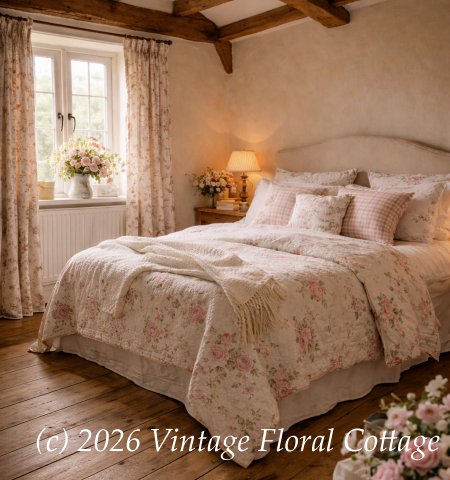
Fresh (or realistic silk) flowers in containers
Floral motifs
Candles, oil lamps, small lamps with warm-toned lighting
Vintage table linens
Hand-crafted quilts and throws
Rag rugs
Wool hooked rugs
Kitchen sink skirt
Gardens
Front flower garden with informal, rather chaotic plant arrangement
Back “potage” garden easily accessed from the kitchen for growing herbs and vegetables
Climbing roses
Wisteria
“Old fashioned” flowers such as roses, bachelor buttons, cosmos, daisies, foxglove, delphinium, and zinnias.
Potted herbs on kitchen window sills
Dried flowers and herbs hanging upside down for drying
Bonus category: Pets and Livestock
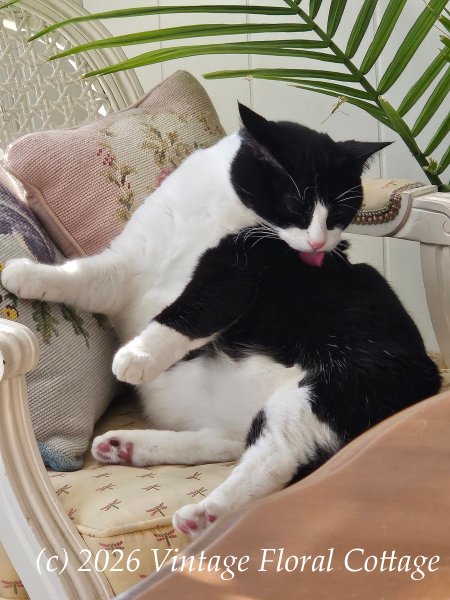
While not everyone can have chickens and goats, nearly everyone can have a cottage cat, dog, crow, or squirrel. A pet (or frequent friendly visitor) brings love and warmth to any home!
Caveats of today’s cottage style
This article is intended as a round-up of how to visually represent cottage style. It’s a listing of the materials, forms, and manners in which functional and decorative household features and items can be visually interpreted to evoke the feel of a cottage. Hopefully it helps you create a cozy and inviting atmosphere in a small space that is filled with simple, time-worn furniture and decor.
I freely admit that I am mostly a visual cottage-dweller: through careful, patient curating, I’ve managed to create a very comfortable and time-worn feel to my home. This translates – for me, at least – into a calming and relaxing atmosphere, and therefore, serenity and happiness in my surroundings. But make no mistake: there are amenities galore just under the surface, from electricity to the internet to the artificial intelligence of Alexa and the same-day delivery that is Amazon Prime3.
Most importantly, remember that there is also a romanticized notion about the atmosphere of cottage homes – they are wistfully sought because they are believed to be warm, loving, and hospitable, despite the relative hardships of a hard-working, rustic life. This sense of love and familial bond doesn’t come from architecture, furniture, or home decor (as Marie Antoinette and others before and since have learned) – it comes from your manner of living and who you are on the inside.
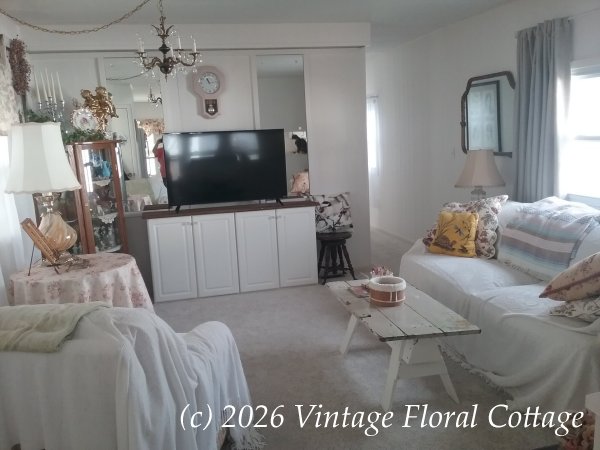
This is why I think most any house can be a cottage home, be it a thatched-roof stone house in the Cotswolds of England or a single-wide mobile home in central Iowa, USA.
Notes
1 Of course, there was active life in the villages as well, where a middle class of shop-keepers also flourished.
2 Notable exceptions are the Gilded Age mansions that were built as summer homes in Newport, Rhode Island for the New York wealthy and rather ironically referred to as “cottages.” These were anything but humble dwellings.
3 All that said, it bears mentioning that while it’s one thing to visually represent cottage style… it’s quite another to actually live a simpler, humbler, and more rustic life. In fact, there are many people who are taking “cottage style” one step further and are actually returning to a more self-sufficient lifestyle through homesteading. While I am not one of those people, I certainly do admire (from afar) their chickens and goats and raised-bed crops.