Welcome to Part 6 of my Tablescaping 101 series! Today we’re turning our attention to what we’re drinking and what we’ll drink it from. Unless we’re going super-casual with plastic cups (totally cool if that’s the vibe!), this means glassware!

Basic Guidelines
Like flatware and the plates in “the stack,” the glassware we need depends on what’s being served – in this case, what beverage(s) will accompany our meal. Here are my basic guidelines for choosing drinkware:
– A different glass for each beverage
– Anchor with water, then set subsequent courses to the right, from the outside in
– Decide whether to set at the place setting, or serve later
Let’s elaborate on each of these!
A different glass for each beverage
A casual family meal might only require one glass per place setting – in it can be served water, milk, soda… whatever each person wishes to have with their meal.
A simple dinner party might require a water glass and a wine glass for each person.
A more formal or multi-course dinner, with a wine for each course, will require a water glass plus a different glass for each wine.
Different/additional glassware will be needed if you are also serving champagne or sparkling wine, or a dessert wine.
Arrange from the outside in
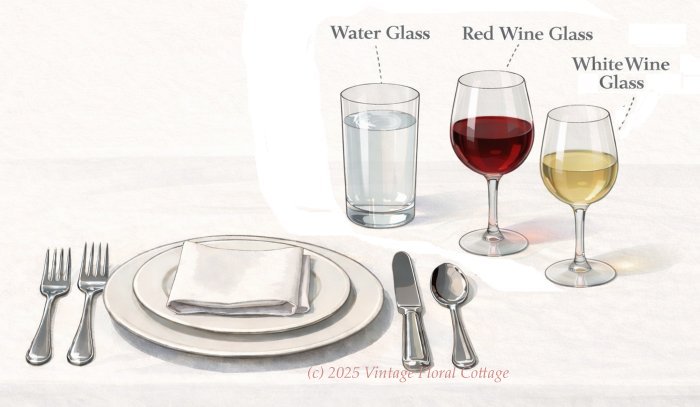
Like flatware, you have one anchor piece – the water glass – that has its designated spot – just above the dinner knife. Then the other pieces – the wine glasses – are set outward from this anchor point, to the right. Usually this means a glass for red wine goes next to the water glass, and a glass for white wine goes to the right of the red. But, in any case, you would use the wine glasses like you do the flatware: from the outside in, leaving the anchor (the water glass) in its designated spot. Therefore, the glass for the first wine to be consumed (the earliest wine course) will be drunk from the glass in the outermost position.
Speaking of wine glasses, there are many different kinds of glasses for different kinds of wine. We won’t do too deep of a dive into types of wine glasses, but we’ll cover the basics – and remember, you don’t have to own every kind of wine glass under the sun to have a lovely dinner!
Decide whether to set a glass in advance, or have it brought in later.
While you might set out the coffee cup and saucer at the place setting (it would go to the far right of the other drinkware), it’s less crowded on the table to have these items brought in after the meal when coffee is being served and after some of the other items have been cleared away. Consider each beverage being served, when it’s being served, and decide whether it needs to be on the table for the entire meal.
Types of Glassware
Now that we know the basics, let’s look at the two main types of glassware used in a meal: water glasses, and wine glasses.
Water Glasses
There are a few styles of glassware that make good vessels for water, but they all have one thing in common: generous portion size. This is because water is the beverage we’ll drink the most of during our meal, and of course in America we need to leave room for ice. (Apparently ice in a beverage is an ‘American thing’? I didn’t know this until comparatively recently.)
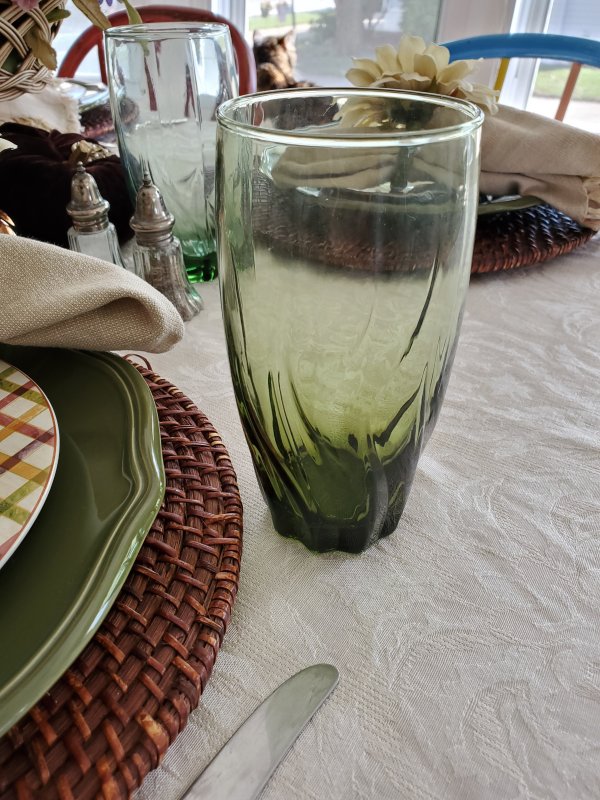
Tumblers. A tumbler can be straight or “footed.” For me, tumblers in various colors and styles are a staple of the tablescaping stash. They are plentiful and fun to collect from thrift stores and other second-hand sources, and they are an easy and inexpensive way to contribute to the color scheme of a table setting. My all-time favorite water glass is this footed tumbler by Indiana Glass (or is it Fostoria? IYKYK):
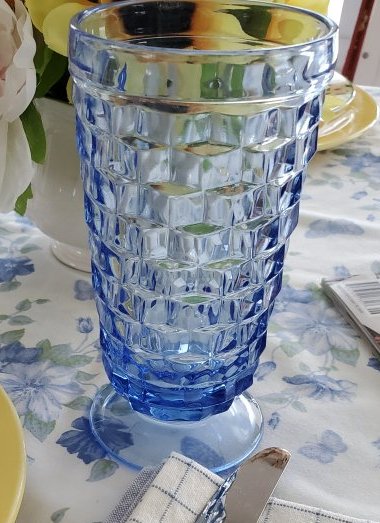
Goblets. For me a goblet is similar to a red wine glass but made of thicker glass or even ceramic. It has either a thick stem or a short foot. Goblets are great for serving water due to the serving capacity. A favorite of mine is “Duratuff” by Libbey – a very industrial name for a great-looking, large-capacity glass.
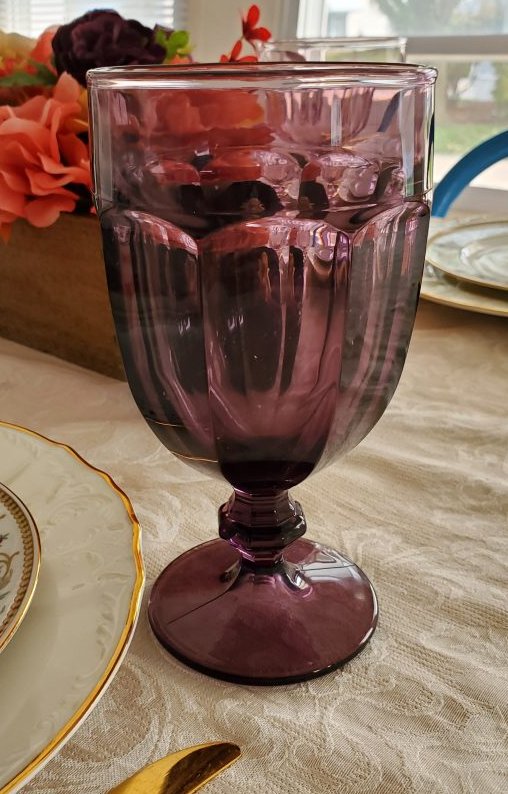
Barware. Some types of glasses get their names from barware: “Old fashioned” and “rocks” are two such barware terms. A rocks glass is a short, stout glass in which you would put ice (“rocks”) and the beverage. A “highball” is a taller version of the rocks glass. A generously sized rocks or highball glass makes a great casual water glass!
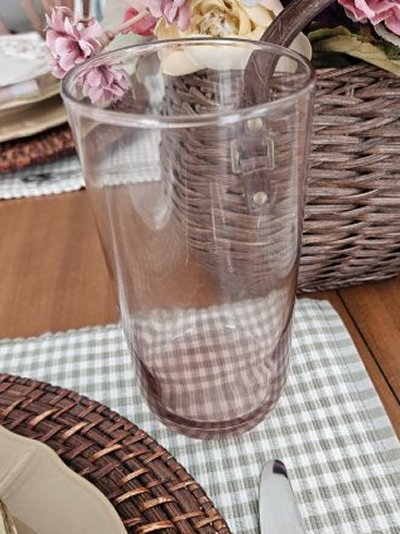
Wine Glasses
Earlier I mentioned that there are different glasses for different types of wine. And not just red vs. white: in the reds category, there are different glasses for Cabernet, Burgundy, Bordeaux, and others. The different types enhance the flavor and other characteristics of each specific wine. It is the same for the whites.
There are many resources out there for choosing exactly the right glass for exactly the type of wine being served, but since our goal here is just to understand the basics, let’s simplify into categories for red and white wine.
Red wines: Glasses for red wines are generally larger with wider openings, larger bowls, and shorter stems. These features allow the red wine to breathe and for flavors and aromas to fully comingle and escape the glass, leading to better taste and a better aromatic experience.
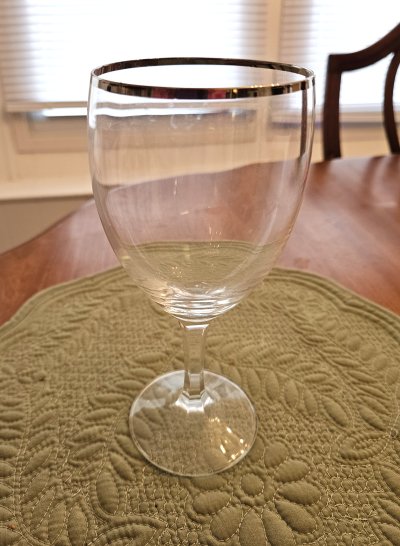
White Wines: Glasses for white wines generally have a narrower bowl and longer stem. These features help keep the subtler blend of aromas in white wines from dissipating, and keep the drinker’s hand away from the bowl so body heat doesn’t change the temperature – and therefore the flavor – of the wine. (Pro tip for guests: always hold a wine glass by the stem – not by the bowl!)

Champagne and sparkling wines. Glasses for champagne and sparkling wine are called flutes. They have a tall, narrow bowl which helps retain the carbonation. A clear or crystal one would also allow you to watch the bubbles rise.
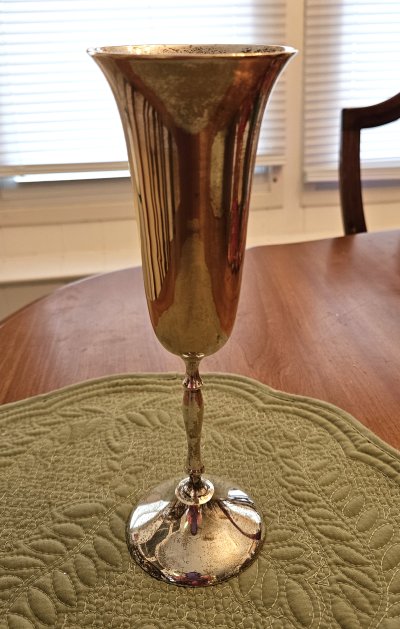
Dessert wine: Glasses for dessert wines are similar in shape to other wine glasses but smaller in capacity, since the serving size for dessert wine is smaller.
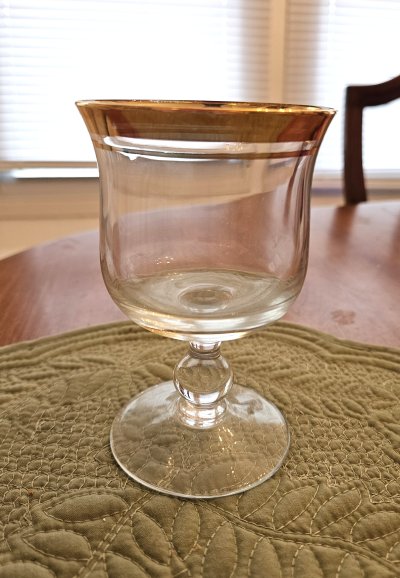
The key to choosing wine glasses is in the menu itself – again, it goes back to what’s being served:
- Choose a wine that pairs well with the course it’s accompanying.
- Match the glass to the type of wine: generally, large-bowled glassware for reds and full-bodied whites; narrower glassware for the other whites and champagne/sparkling wine; and smaller capacity glassware for the dessert wines.
- Choose a wine (and therefore a glass) for each course, and arrange them in order to the right of the water glass, with the first course in the outermost position. Always return the water glass to its anchor position after taking a sip, and use the other glassware from the outside in.
Other glassware
Water and wine are not the only beverages one might serve. For most other beverages, such as iced tea, milk, or soda, a tumbler could be used
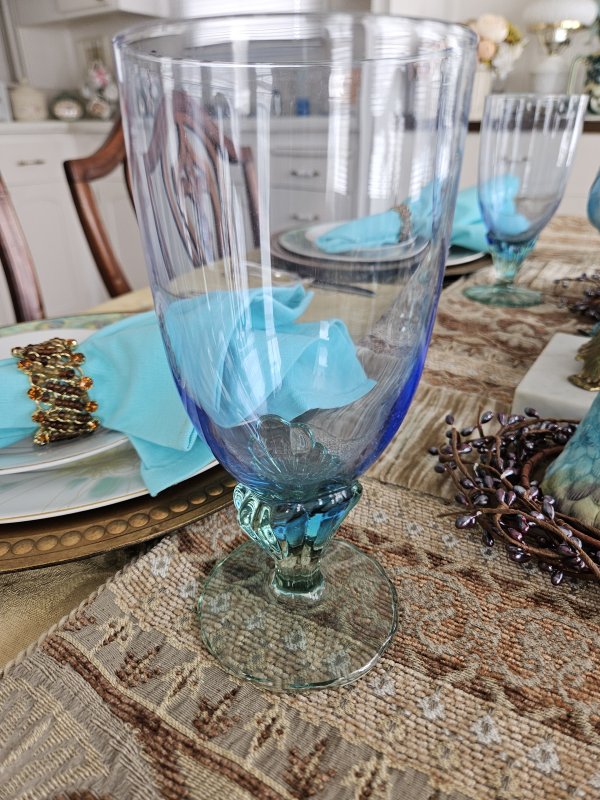
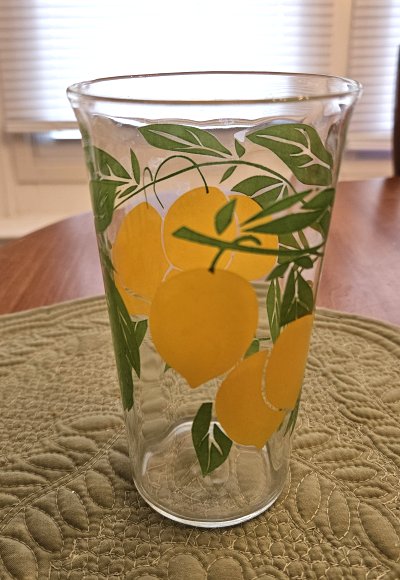
For juice, typically served at breakfast, a small-capacity glass is used. Decorative juice sets, including a carafe or pitcher and set of small glasses, were popular in the mid-century era. These can be great on a vintage-themed breakfast table, as can “Swanky Swigs” – columnar glasses with brightly colored designs printed on them.
Final Thoughts on Glassware
Don’t be put off by the wide variety of glassware when designing your tablescape. Just remember you will want a glass for water and then separate glasses for each of the other beverages, whether or not they are technically the “correct” glasses. When considering your “other beverages,” think first about what’s being served and choose the right glass for the beverage that accompanies the course.
Glassware is plentiful and inexpensive at thrift stores and other secondhand venues, so have fun collecting!